Your Expert Guide to Dual Adjustable Pulleys: Your All-in-One Home Gym Solution
Introduction
Ever wish you had a complete gym at home without filling your entire room with bulky equipment? You can. The solution is simpler than you think.
As trainers and athletes, we’ve found one piece of equipment consistently delivers: the Dual Adjustable Pulley System. It’s the secret weapon for intelligent, efficient, and complete body fitness.
Think of it as your all-in-one strength station. One compact setup that trains every muscle with silky-smooth resistance. This isn’t just another gadget. It’s a paradigm shift for your home gym.
Welcome to my Expert Guide to Dual Adjustable Pulley system. Let’s break down why this might be the last piece of equipment you’ll ever need to buy.
What Is a Dual Adjustable Pulley System?
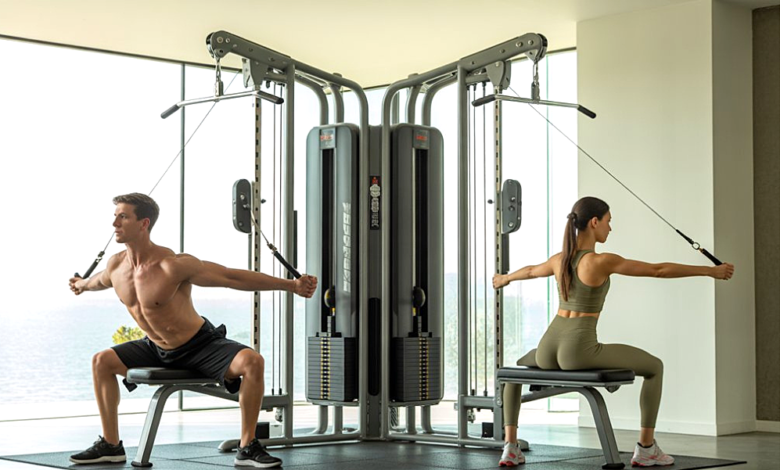
In simple terms A dual adjustable pulley system is a cable-based body fitness machine featuring two independent pulleys that can be adjusted vertically along a frame. This adjustability lets you change angles in seconds.
That freedom is magic. It unlocks hundreds of exercises from a single footprint. From heavy compound lifts to delicate rehabilitation moves, it handles it all.
The Key Pieces: It’s Simpler than It Looks
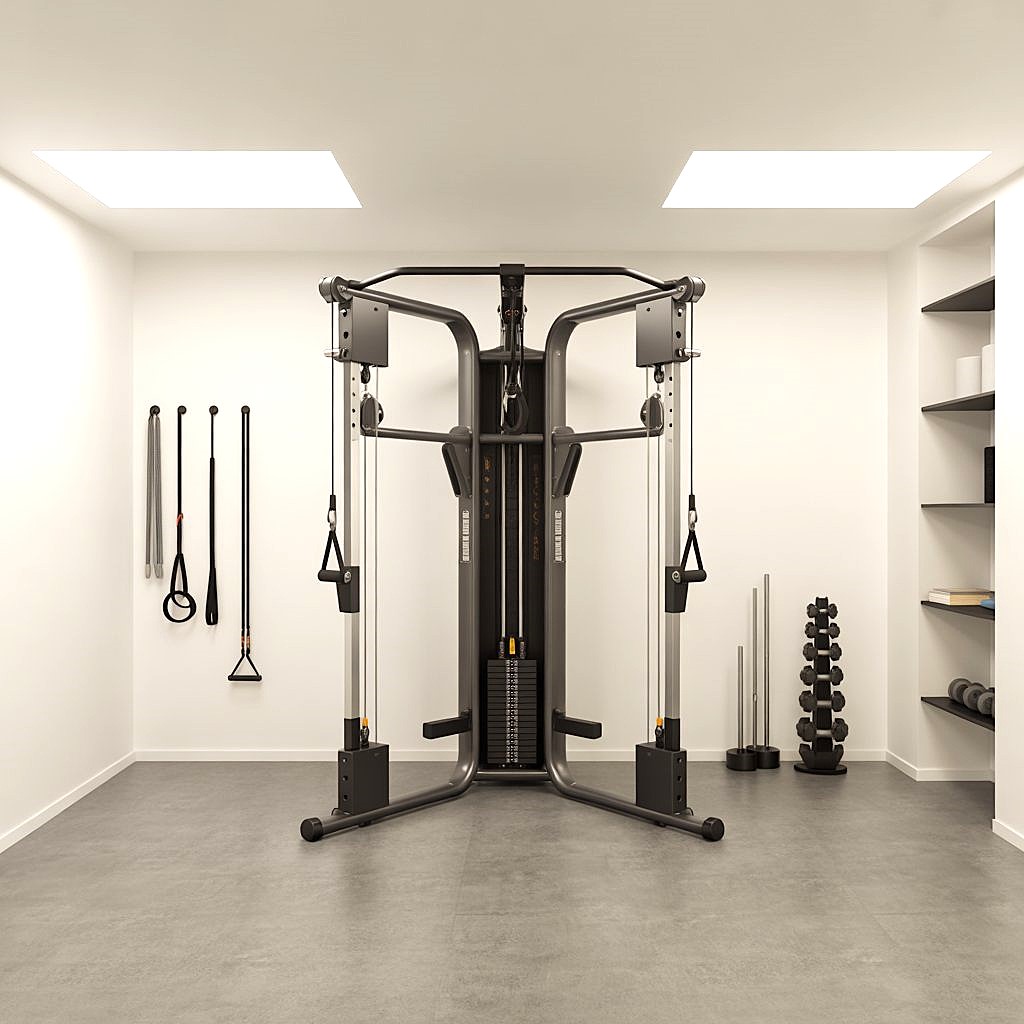
A dual adjustable pulley system includes a sturdy metal frame. The design is brilliantly straightforward:
The Frame: Your rock-solid foundation.
- Two Adjustable Arms: These move vertically to set your angle.
- Cables & Resistance: A smooth weight stack or plates provide the load.
- Attachments: Handles, bars, and straps let you shift from a bicep curl to a leg workout instantly.
How It Differs From Traditional Cable Machines
Unlike fixed cable machines found in commercial gyms, dual adjustable pulleys allow complete freedom of movement.
A Dual Adjustable Pulley System flips the script. You control the angle. Your body moves naturally. It’s the difference between painting by numbers and creating a masterpiece. Therefore, provide freedom in body fitness excesses.
Benefits of Dual Adjustable Pulleys for Home Gyms
One of the biggest reasons people choose dual adjustable pulleys is versatility. This single piece of equipment can replace multiple machines, saving both space and money in the long run.
Full-Body Workout Ability
With dual adjustable pulleys, you can perform pushing, pulling, rotating, and lifting movements from virtually any angle. Chest presses, pull-down, rows, squats, lunges, and even rotational core exercises are all possible. This one system delivers a complete body fitness regimen for strength, muscle, and mobility.
Space-Saving Design
It replaces a room full of bulky gear. Dual adjustable pulleys are designed to maximize functionality while minimizing footprint. Many models fit comfortably against a wall, making them ideal for compact home gyms. It’s like having an entire home gym at your comfort.
Suitable for All Fitness Levels
Whether you’re a beginner just starting your fitness journey or an experienced lifter chasing strength gains, this system grows with you. You can start with light resistance and gradually increase weight as you progress, ensuring long-term usability and value.
How to Use a Dual Adjustable Pulley System Correctly
Using a dual adjustable pulley system is simple, but proper setup makes a huge difference in results and safety.
Master the Height.
The pulley position dictates the exercise. Shoulder height for chest flies. High above for tricep pushdowns. Take ten seconds to set it correctly. Your muscles will feel the difference immediately.
Choose Weight Wisely.
Start light. Cable resistance feels different from free weights—it’s constant. Focus on a slow, controlled motion. Leave your ego at the door. Perfect form always wins.
Safety Always First
- Double-check that attachments are clipped in securely.
- Maintain a strong, stable posture throughout every rep.
- Move with control, not momentum.
- If a movement feels wrong, it probably is. Stop and reset.
Think of this system as your precision tool. It rewards patience and technique. It’s the smart choice for anyone serious about transforming their home gym and their fitness.
Available Brands in Market (with specifications)
Here are 7 of the best dual adjustable pulley systems available in the US market (including functional trainers with dual cables/weight stacks) — organized in a specifications table so you can compare features, resistance, dimensions, and ideal use cases before buying.
| Brand & Model | Type / Resistance | Weight Stack / Capacity | Size | Key Features | Ideal Use |
| Muscle D Fitness Dual Adjustable Pulley | Dual adjustable cable machine (Muscle D Fitness) | 2 × 200 lb or 2 × 400 lb stacks | 88” & 95” | Independent high/low pulleys, integrated chin-up bar, accessory storage) | Commercial/home gyms |
| XMARK Functional Trainer | Dual weight stack functional trainer (Best Reviews Guide) | 2 × 200 lb stacks (approx.) | 84″ H × 65″ | 2:1 resistance ratio, compact space-efficient design | Home/garage gyms |
| Life Fitness Dual Adjustable Pulley (DAP) | Heavy-duty dual adjustable machine (Titanium Strength) | ~390 lb stack) | L × W × H 44 in × 62 in × 95 in | 1:4 resistance level + multi-directional system | Advanced users & serious training |
| RPM Power Dual Adjustable Pulley Machine | Commercial grade dual adjustable system RPM Power) | 2 × 120 kg (~265 lb) stacks | 160 × 100 (approx.) | Multi-grip pull-up bar, 23 height settings, heavy steel | Large home/home pro gyms |
| Bulldog Gear Zero 2 Dual Adjustable Pulley | Wall-mount dual cable system (Bulldog Gear) | 2 × 50 kg (~110 lb) stacks | total boxed weight of 220 kg. | Slim line design, 26 height variations | Small spaces/apartments |
| Titan Fitness Tall Wall Mounted Pulley Tower V3 | Wall-mounted cable pulley (ACTIVE.com) | Up to 350 lb capacity (pulley system) | Vertical wall-mounted tower | Dual stirrup handles, 18 positions | Budget/space-saving option |
| Functional Trainer w/ Dual Pulleys (Generic Premium) | Dual adjustable functional trainer | Varies by model (often 180–300 lb stacks) | Varies by unit | Full functional trainer features | Best value home gyms |
Sample Full-Body Workout Using Dual Adjustable Pulleys
Here’s how you can structure your workouts using this versatile machine.
Beginner Routine
- Cable Squats – 3 sets of 12 reps
- Chest Press – 3 sets of 10 reps
- Seated Row – 3 sets of 10 reps
- Bicep Curls – 2 sets of 12 reps
- Tricep Pushdowns – 2 sets of 12 reps
Intermediate Routine
- Cable Lunges – 3 sets of 10 reps per leg
- Incline Chest Flyes – 3 sets of 12 reps
- Lat Pulldowns – 3 sets of 10 reps
- Face Pulls – 3 sets of 15 reps
- Core Woodchoppers – 3 sets of 12 reps
Advanced Routine
- Cable Deadlifts – 4 sets of 8 reps
- Single-Arm Chest Press – 4 sets of 10 reps
- Heavy Rows – 4 sets of 8 reps
- Overhead Tricep Extensions – 3 sets of 12 reps
- Anti-Rotation Press – 3 sets of 15 reps
Conclusion
A dual adjustable pulley system truly earns its reputation as an all-in-one home gym solution. It combines versatility, efficiency, and safety into a single piece of equipment that adapts to your fitness goals over time. Whether you’re training for strength, muscle tone, or overall body fitness , this system offers unmatched flexibility. If you want a home gym that grows with you and never feels limiting, dual adjustable pulleys are a smart and future-proof investment.
FAQs
1. Are dual adjustable pulleys good for beginners?
Yes, they are excellent for beginners because they offer controlled resistance and allow gradual progression with reduced injury risk.
2. Can I build muscle using a dual adjustable pulley system?
Absolutely. With proper resistance and progressive overload, you can build significant muscle using cable-based training.
3. How much space do I need for a dual adjustable pulley?
Most systems require minimal floor space and fit well in small rooms or garages.
4. Are dual adjustable pulleys better than free weights?
They aren’t better or worse—just different. Cables offer constant tension and versatility, while free weights excel at raw strength.5. Is a dual adjustable pulley worth the investment?
If you want a versatile, long-term home gym solution, the answer is yes. It replaces multiple machines and supports full-body training.